
Can I Buy an Investment Property in an LLC?
One of the first questions I hear from real estate investors is, “Can I buy the property in an LLC?”
The answer is yes—but not with every type of mortgage.
Whether you can close in an LLC depends largely on the financing program you choose. Conventional financing through Fannie Mae or Freddie Mac works differently from DSCR and certain portfolio loan programs.
Understanding that difference before you make an offer can save you from having to restructure the transaction later.
Why Do Investors Want to Buy Property in an LLC?
Many real estate investors prefer holding investment properties in an LLC for liability, ownership, accounting, or business-planning reasons.
But forming an LLC doesn't automatically mean your mortgage can be made to the LLC.
The loan program determines how the property can be financed and how title can be held at closing.
Can I Use a Conventional Loan to Buy in an LLC?
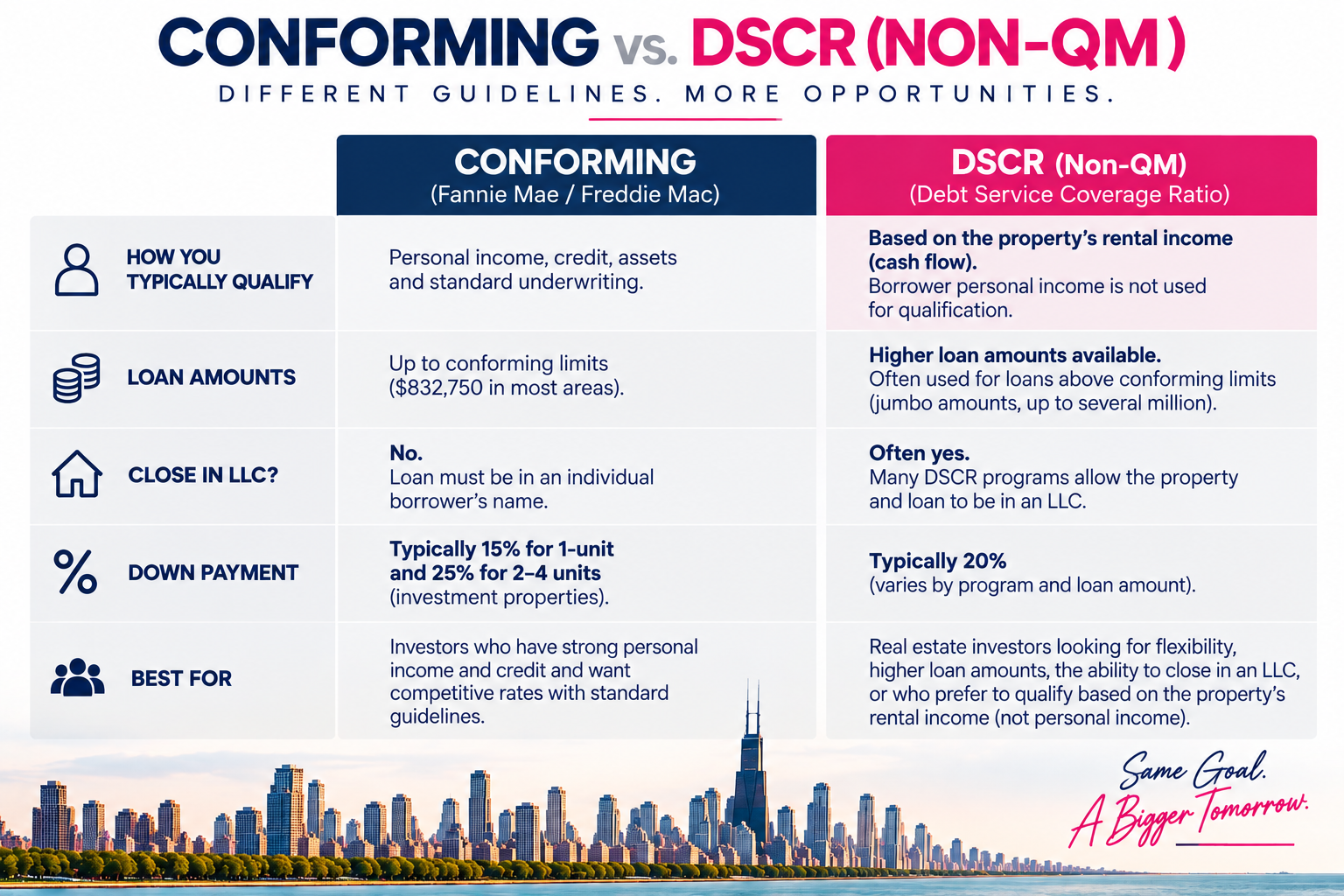
Generally, no—not if you're using standard conforming financing through Fannie Mae or Freddie Mac.
With conforming financing, the individual borrower obtains the mortgage rather than the LLC. This is important because conventional financing can be an attractive option for investors, but if closing directly in an LLC is a priority, another type of financing may be a better fit.
This is one reason I like to have the LLC conversation before we decide on the loan program.
Can I Use a DSCR Loan to Buy in an LLC?
This is where things become much more flexible.
Many DSCR (Debt Service Coverage Ratio) loan programs allow an investment property to close directly in an LLC.
DSCR loans are designed specifically for real estate investors. Instead of qualifying primarily based on the borrower's employment income, the lender looks heavily at the property's rental income and whether it supports the property's required housing payment.
That can make DSCR financing especially useful for investors who:
Want to close in an LLC
Own multiple rental properties
Have complicated personal or business income
Are self-employed
Don't want to qualify using traditional employment income
Are building a larger real estate portfolio
What About Portfolio Loans?
It depends on the program.
Some portfolio lenders allow investment properties to close in an LLC, while others require the borrower to close individually.
That's why I don't like to make a blanket statement that a “portfolio loan allows LLCs.” We have to look at the guidelines for the specific program.
If the Loan Closes in an LLC, Does the Lender Still Look at Me?
Yes.
This is one of the biggest misconceptions about LLC financing.
Closing the property in an LLC doesn't necessarily mean the lender ignores the individual behind the LLC.
Depending on the program, the lender may still require your:
Social Security number
Personal credit
Assets and reserves
Personal guarantee
And depending on the lender and loan program, the mortgage may report to your personal credit even though the property and loan closed in the LLC.
So it's important to separate two different ideas:
How the property is titled and how the borrower is underwritten are not necessarily the same thing.
Conforming vs. DSCR
Should I Buy My Investment Property in an LLC?
That's ultimately a conversation to have with your attorney and tax professional because there are legal and tax considerations outside the mortgage itself.
From the financing side, my job is to make sure we structure the loan around what you're trying to accomplish.
If closing in an LLC is important to you, tell me that before we choose the financing. We can compare conventional, DSCR and portfolio options and determine which structure makes the most sense for the property and your overall investment strategy.
Think Beyond This One Property
The best investment financing isn't always simply the loan with the lowest rate.
We should also be thinking about:
How much cash are you putting into the property? What will the property cash flow? How much liquidity will you have afterward? And how will today's financing affect your ability to purchase the next property?
That's how I approach investment financing.
Think like an investor—not just a borrower.
If you're considering purchasing an investment property and want to understand your financing options, let's review the property, your goals, and the different ways we can structure the loan.
